
You wake up with a tight jaw. Your temples ache by mid-morning. Your dentist has pointed out worn or cracked teeth. For many people, those three things share one cause: the chewing muscles are working far harder than they should, often while you sleep.
Botulinum toxin injections into the masseter, the large chewing muscle at the back of the jaw, are one way to calm that muscle down. People search for it as masseter Botox, Botox for TMJ, or Botox for jaw clenching. This guide explains what it does, what the research actually shows, and where it fits among the other options.
What TMJ disorder is
TMJ stands for the temporomandibular joint, the hinge just in front of each ear where the lower jaw meets the skull. "TMJ" is often used loosely for any pain in that area. The medical term for the group of problems is temporomandibular disorders, or TMD.
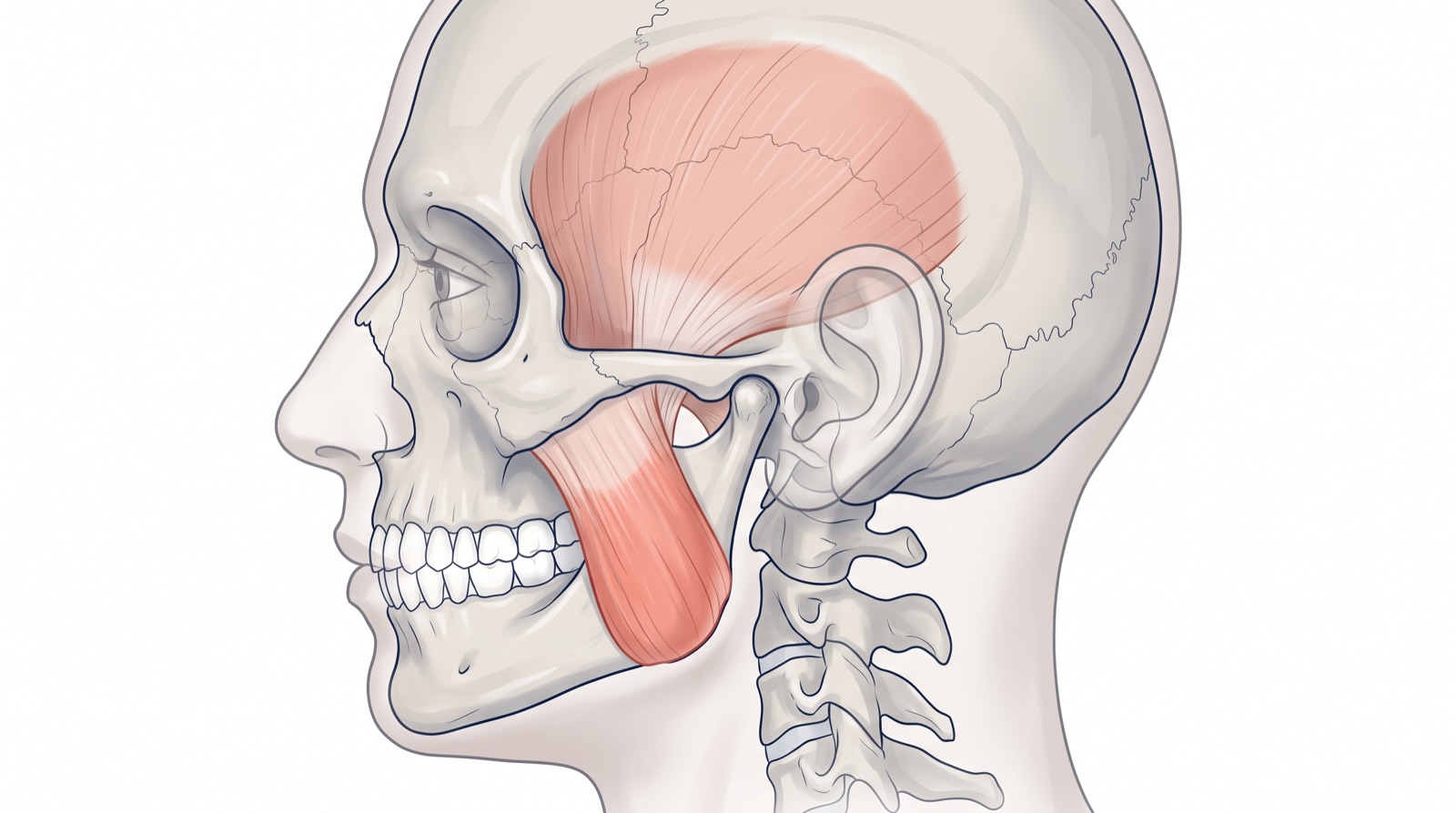
TMD falls into two broad groups. In the first, the pain comes mostly from the muscles that move the jaw. In the second, the problem is inside the joint itself, such as a displaced disc or arthritis. Many people have some of both.
This matters because botulinum toxin works on muscle. It is used for muscle-driven pain and clenching. It is not a treatment for a damaged joint.
Signs you may be clenching or grinding
Clenching and grinding are known as bruxism. It can happen during sleep, during the day, or both, and many people don't know they do it until someone else notices.

- A sore, tired, or tight jaw, especially on waking.
- Dull headaches at the temples.
- Worn, flattened, chipped, or sensitive teeth.
- A partner who hears grinding at night.
- Jaw muscles that feel firm or look bulky at the angle of the jaw.
- Clicking, or discomfort when chewing tough food.
Stress, poor sleep, caffeine, alcohol, smoking, and some medications can all make clenching worse. Snoring and gasping at night can point to a sleep breathing problem, which is worth raising with your family doctor.
Why the muscle matters more than you might think
The masseter is one of the strongest muscles in the body for its size. When it clenches for hours through the night, it can tire and ache like any overworked muscle, and it can grow thicker over time.
That is the key idea behind this treatment. A night guard protects your teeth from the force. It does not lower the force itself. Botulinum toxin works on the other side of the problem: it reduces how strongly the muscle can contract.
A night guard is a shield: it protects teeth and fillings from grinding. Botulinum toxin is a volume control: it turns down how hard the muscle squeezes. They are often used together.
First steps most people should try
Most jaw pain settles with simple care, and botulinum toxin is not where treatment usually starts. Before injections, it makes sense to try the basics and to have a dentist check your teeth and bite.

- A custom night guard from your dentist to protect the teeth during sleep.
- Softer foods for a while and less gum chewing, to rest the muscles.
- Warm compresses and gentle jaw stretches.
- Catching daytime clenching. Teeth apart and jaw loose is the resting position; clenched teeth are a habit you can learn to notice.
- Physiotherapy focused on the jaw and neck.
- Sleep and stress, which both drive clenching.
When these measures help only partly, or clenching is strong enough to keep wearing through guards and teeth, botulinum toxin becomes a reasonable conversation.
How masseter Botox works
Botulinum toxin blocks the chemical signal that tells a muscle to contract. A small, measured amount placed into the masseter partly quiets that signal in the injected area. The muscle still works for talking and chewing. It just can't clench as hard.
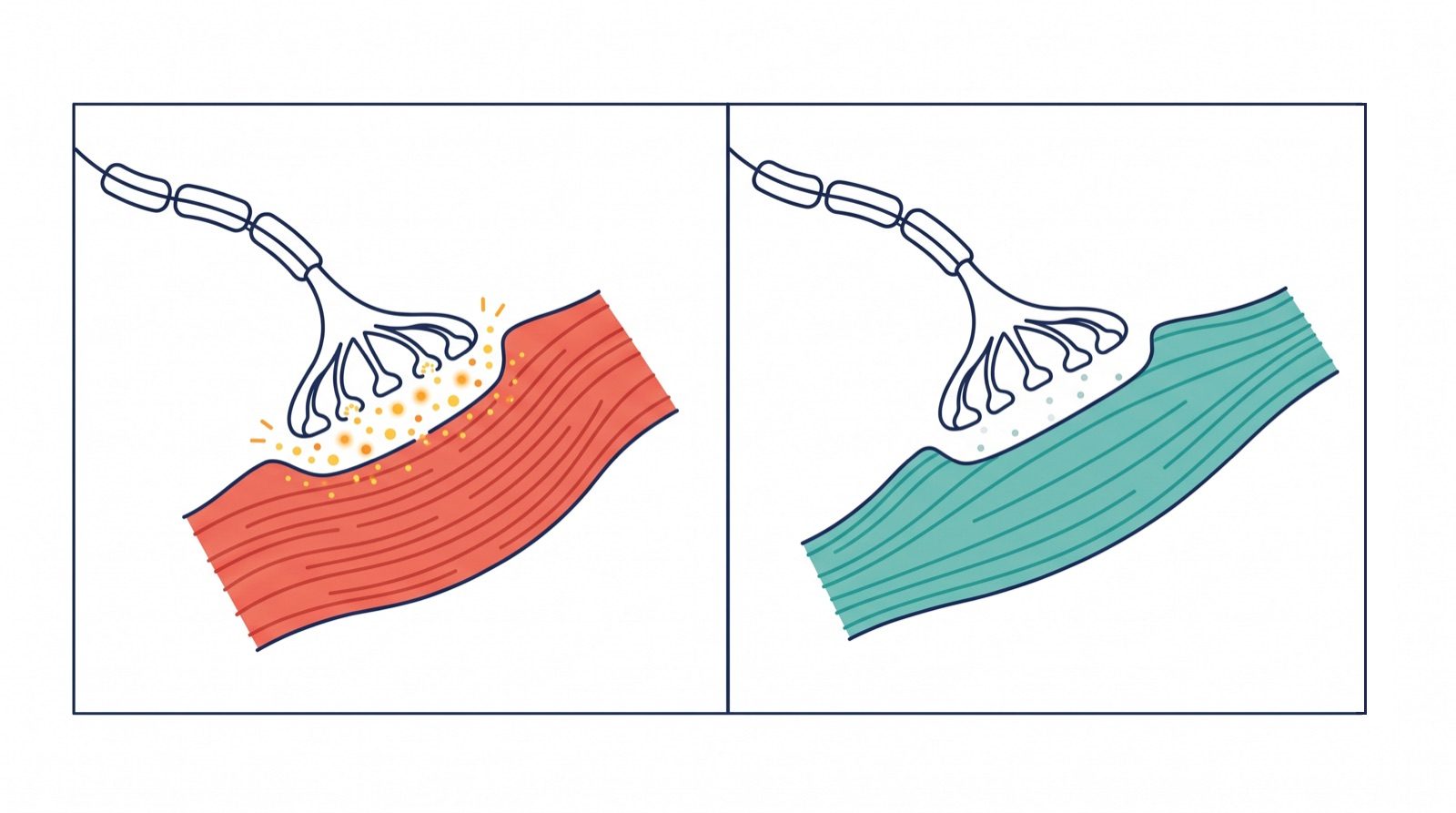
The effect builds over a week or two and wears off gradually as the nerve endings recover. That is why the treatment is temporary, and why it can be adjusted or stopped.
Botulinum toxin is approved by Health Canada for a set list of medical and cosmetic uses. Treating TMJ disorders, clenching, or masseter size is not on that list, so this use is considered off-label. Off-label treatment is common in medicine when a physician judges it appropriate. It should be discussed openly, including what the evidence does and doesn't show.
What the research shows
The research is encouraging but not definitive, and it is fair to say so plainly.
- Jaw muscle pain. A 2024 review of 20 randomized trials found botulinum toxin relieved muscle-related TMD pain better than placebo, with results similar to conventional treatments. It did not improve how wide people could open their mouths.1 An earlier review found the benefit over placebo was clearest at one month and rated the overall evidence as low quality.2
- Sleep bruxism. A 2026 analysis of placebo-controlled trials found injections reduced the frequency of grinding episodes and the strength of jaw muscle activity during sleep.3
- Compared with a night guard. A 2026 review of 36 studies found night guards and botulinum toxin gave similar pain relief for sleep bruxism. Some studies saw faster short-term relief with injections, while guards protect the teeth.4
- The big picture. An overview of 14 reviews found the existing studies point toward less pain, fewer grinding episodes, and lower bite force, but said their quality was too low for firm conclusions.5
In practical terms: for the right person, it can be a useful option. It is not a cure, results vary, and it belongs inside a wider plan rather than on its own.
Pain relief or jaw slimming: same muscle, different goals
The same injection is used for two reasons. Some people come for pain, clenching, or tooth wear. Others come because a large masseter makes the lower face look wider than they would like.
When the muscle is used less, it gradually becomes smaller. Trials of masseter reduction found meaningful decreases in muscle size and prominence compared with placebo over the short term.6 Across studies, muscle thickness at three months was commonly reduced by roughly 10 to 30 percent.7
If you are coming mainly for clenching, it is worth knowing that a softer jaw contour can come along with it. If you are coming for contour, the consultation should still check for clenching, since the two often go together.
What the appointment is like
The first visit is mostly a conversation and an examination. Dr. Roldan will ask about your symptoms, when they happen, and what you have already tried, then feel the jaw muscles while you clench and relax.
Assessment
Confirming that the pain is mainly muscular, checking the joint, and screening for anything that needs a different plan.
Mapping the muscle
You clench so the edges of the masseter can be felt and the injection points marked, staying clear of the smile muscles nearer the mouth.
The injections
A few small injections on each side with a very fine needle. Most people describe a brief pinch. The whole visit is usually short.
Afterwards
You can usually return to normal activities the same day. Avoid rubbing or massaging the area for the rest of the day.
Results and how long they last
Most people notice the jaw feeling less tight within one to two weeks. Changes in jaw contour, when they happen, take longer, usually several weeks, because the muscle slims gradually.
The muscle-relaxing effect commonly lasts around three to four months. In one study, bite force was clearly reduced at three months and back to normal by six months, although visible changes lasted longer.8 If treatment helps, it can be repeated. Some people find they need it less often over time; others stop and manage with a guard alone.
Side effects and risks
In the research, botulinum toxin for jaw problems was generally well tolerated.2 Side effects are usually mild and temporary:
- Tenderness, mild swelling, or a small bruise where the needle went in.
- Chewing fatigue with tough or chewy foods for a few weeks.
- A mild headache in the first day or two.
- Rarely, a temporarily uneven smile if the product affects a nearby muscle. This wears off as the treatment does.
There is also a longer-term question. A 2024 review found a small reduction, about 6 percent, in the thickness of the outer layer of jaw bone after injections in humans, with no clear change in overall bone volume or density.9 The effect of many repeated treatments over years has not been well studied. It is one reason to use the lowest effective dose and to reassess before each repeat.
Who should wait or choose another option
Botulinum toxin is not appropriate for everyone. It is usually avoided or delayed if you are:
- Pregnant or breastfeeding.
- Living with a nerve or muscle condition such as myasthenia gravis.
- Dealing with an infection or skin problem where the injection would go.
- Someone who has reacted badly to botulinum toxin before.
Bring a full list of your medications and supplements, since some can interact.
See a doctor or dentist promptly if your jaw locks open or closed, your bite suddenly changes, or you have facial swelling with fever, new numbness, or pain after an injury. Jaw pain together with chest pain, shortness of breath, sweating, or nausea can be a sign of a heart problem: call 911.
Common questions
Does Botox work for TMJ?
For pain that comes mainly from overworked chewing muscles, reviews of randomized trials found it reduced pain more than placebo, with results similar to conventional treatments. The research quality is mixed, it doesn't help joint damage, and it is not usually the first step.
How long does masseter Botox last?
The muscle-relaxing effect usually lasts around three to four months. The change in jaw contour can last longer. Treatment is repeated only if it helped and you want to continue.
Will Botox in the jaw change the shape of my face?
It can. As a large masseter relaxes, it slims over several weeks, which can soften the width of the lower face. Discuss whether you want that effect before treatment.
Does it hurt?
Most people describe a brief pinch with each injection. The needle is very fine and the number of injections is small.
Will I still be able to chew normally?
Yes. Everyday chewing, talking, and smiling continue as normal. Some people notice their jaw tires sooner with very tough or chewy foods for the first few weeks.
Can I keep wearing my night guard?
Usually, yes. The guard protects your teeth; the injection lowers the force. They are often used together. Check with your dentist about your guard.
Is Botox for TMJ covered by OHIP?
It is generally not covered by OHIP. Some private insurance plans review TMJ treatment case by case, so check with your insurer. Contact the office for current fees.
Do I need a referral?
A referral is not usually required for this consultation. If you already see a dentist or physiotherapist for jaw problems, bring their notes.
Is Botox for clenching the same as cosmetic Botox?
It is the same type of medication used in a different muscle, for a different purpose. For more on how botulinum toxin compares with fillers, see the guide linked below.
Sources & further reading
- Zhu M, et al. Effects of botulinum toxin type A in patients with painful temporomandibular joint disorders: a systematic review and meta-analysis. Annals of Medicine and Surgery. 2024.
- Machado D, et al. Botulinum toxin type A for painful temporomandibular disorders: systematic review and meta-analysis. The Journal of Pain. 2020.
- Val M, et al. Effects of botulinum toxin injection on masticatory muscle activity in sleep bruxism: a systematic review and meta-analysis. Journal of Clinical Medicine. 2026.
- Aldosari LIN, et al. Occlusal splints versus botulinum toxin for the management of clinical sequelae associated with adult sleep bruxism: a systematic review and meta-analysis. Cranio. 2026.
- Coelho MS, et al. Botulinum toxin for bruxism: an overview. Toxins. 2025.
- Machado GF, et al. Efficacy of botulinum toxin for masseter muscle hypertrophy: a systematic review and meta-analysis. Journal of Plastic, Reconstructive & Aesthetic Surgery. 2026.
- Rauso R, et al. Botulinum toxin type A injections for masticatory muscles hypertrophy: a systematic review. Journal of Cranio-Maxillofacial Surgery. 2022.
- Ågren M, et al. Duration of bite force reduction following a single injection of botulinum toxin in the masseter muscle bilaterally: a one-year non-randomized trial. Journal of Oral Rehabilitation. 2023.
- Moussa MS, et al. Adverse effect of botulinum toxin-A injections on mandibular bone: a systematic review and meta-analysis. Journal of Oral Rehabilitation. 2024.
- National Institute of Dental and Craniofacial Research: TMD (temporomandibular disorders)
- Health Canada: Cosmetic injections
Related patient guides
Individual results vary. This guide is general information and is not a substitute for a medical assessment.
Start with the cause of the jaw pain.
Bring your symptoms, what you have tried, and any notes from your dentist to the consultation.
Contact the office for guidance →