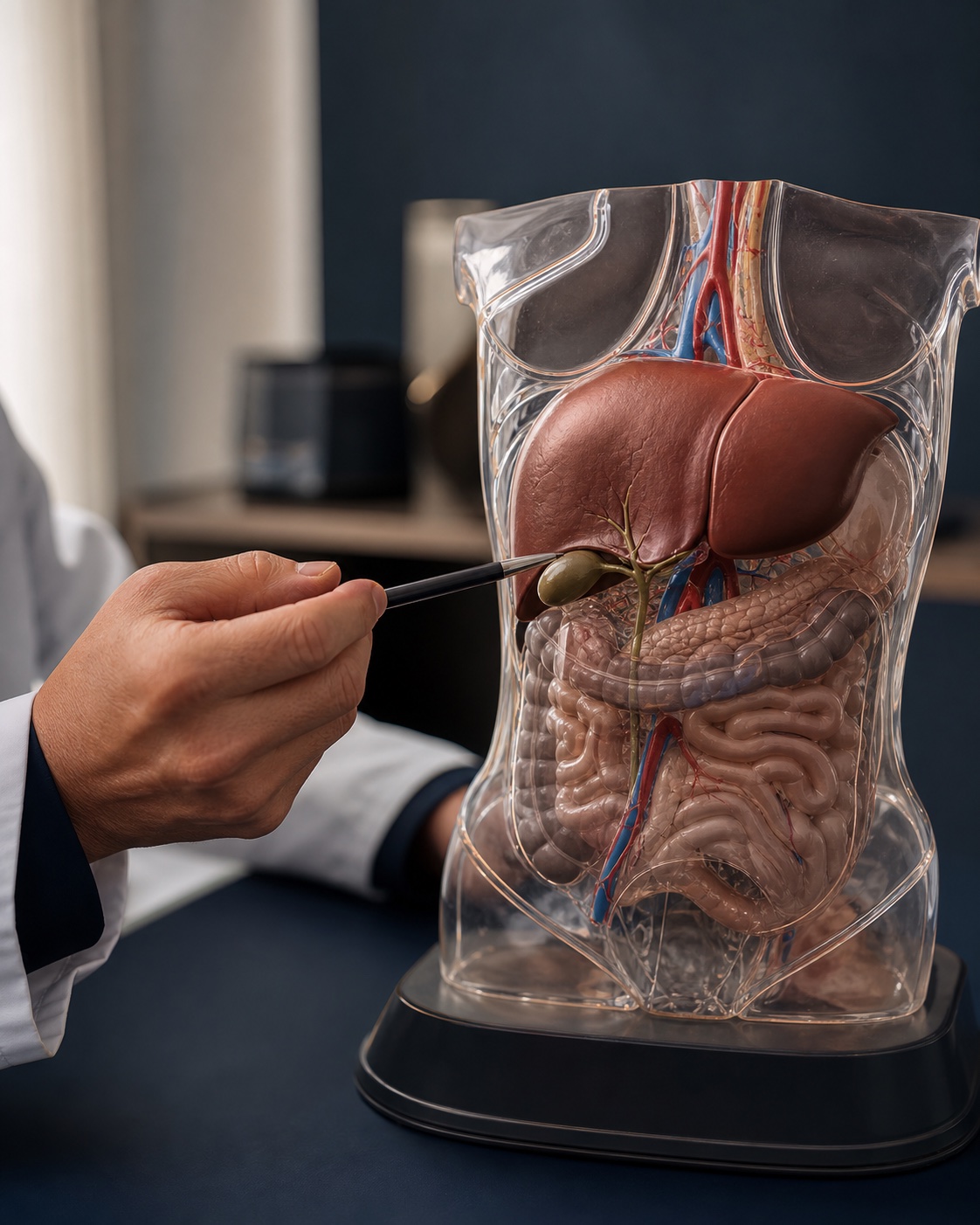
A gallstone can be an incidental finding that never causes trouble—or the reason for recurring attacks of upper abdominal pain. Good care starts by separating those two situations.
What gallstones are
The gallbladder is a small organ beneath the liver. It stores bile and releases it into the small intestine to help digest fat. Gallstones are hardened deposits that form within the gallbladder, usually from substances in bile. They can range from tiny grains to larger stones, and a person may have one or many.
Many people have “silent” gallstones. These are found incidentally on imaging done for another reason and have not caused typical symptoms or complications. In that setting, treatment is often unnecessary. The presence of a stone on an ultrasound is not, by itself, the same thing as a reason for surgery.
Symptoms and complications drive the conversation. A clinician considers where the pain is, how long it lasts, what brings it on, associated symptoms, examination findings, blood tests, and imaging together.
What a gallbladder attack can feel like
When a gallstone temporarily blocks the outlet of the gallbladder, it can cause biliary pain. This is commonly felt in the upper right abdomen or upper middle abdomen. It may be steady and intense, may spread toward the back or right shoulder, and can occur after a heavy or fatty meal. Nausea or vomiting may accompany it.
An episode can last from less than an hour to several hours. Pain that predictably comes and goes is different from persistent pain with systemic illness, which can signal inflammation, infection, or blockage elsewhere in the biliary system.
Symptoms can overlap with other conditions
Reflux, ulcers, pancreatitis, liver conditions, bowel problems, heart disease, and even musculoskeletal pain can produce symptoms in a similar region. That is why it is unwise to diagnose “gallbladder pain” from location alone, especially when symptoms are new.
Do not wait for a routine appointment if upper abdominal pain is severe, persistent, or accompanied by fever or chills, jaundice, repeated vomiting, marked tenderness, faintness, dark urine, or unusually pale stools. Chest pressure, shortness of breath, or other symptoms of a possible heart problem are also emergencies.
How gallstones are assessed
The assessment usually begins with a detailed history and abdominal examination. Blood tests may look for infection, inflammation, liver or bile-duct obstruction, and pancreatic irritation. Ultrasound is often the first imaging test because it can identify gallstones and look for features of gallbladder inflammation or bile-duct enlargement.
Additional imaging may be needed when the picture is unclear or there is concern about a stone in the common bile duct. The exact test—such as magnetic resonance imaging of the bile ducts or another specialized study—depends on the clinical question.
Describe the pattern
Note where the pain begins, how long it lasts, whether it travels, what you ate beforehand, and whether fever, vomiting, jaundice, bowel changes, or urinary symptoms occur.
Connect symptoms to findings
Imaging is interpreted alongside the history and examination. An incidental stone may not explain vague or unrelated symptoms.
Discuss the alternatives
Ask what else might be causing the symptoms, what would happen without surgery, and which warning signs should change the plan.
When gallbladder surgery is considered
For symptomatic gallstones, surgical removal of the gallbladder—called cholecystectomy—is a common treatment. It removes the organ in which stones form rather than removing individual gallstones and leaving the gallbladder behind.
Most planned operations are performed laparoscopically through several small incisions. A camera and long instruments allow the surgeon to identify the gallbladder and its connections, remove it, and inspect the area. In selected situations an open operation may be safer or necessary. Conversion from a laparoscopic approach to an open incision is a safety decision, not a failure.
The decision is individualized
Frequency and severity of attacks, evidence of inflammation, pancreatitis, duct stones, medical fitness, previous abdominal operations, and the likelihood that the gallbladder is truly causing the symptoms all matter. The risks of continuing observation are weighed against the risks and expected benefits of surgery.
Every operation has potential complications. For cholecystectomy these can include bleeding, infection, blood clots, injury to nearby structures or the bile duct, bile leakage, retained duct stones, anesthesia complications, and the need for further procedures. A surgical consultation should place those risks in the context of your own health.
“Which part of my history and testing makes you think the gallbladder is the source of my symptoms?” A clear answer helps set realistic expectations.
Recovery and life without a gallbladder
The liver continues to make bile after the gallbladder is removed; bile flows more continuously into the intestine instead of being stored. Most people can live without a gallbladder and return to a regular diet, although temporary loose stools, bloating, or sensitivity to rich meals can occur.
Recovery depends on the operative approach, the severity of inflammation, the work you do, and your general health. Walking is usually encouraged early, while lifting, driving, wound care, bathing, and return-to-work instructions are individualized. Follow the discharge plan rather than a generic calendar.
When to call after surgery
Contact the surgical team for increasing pain, persistent vomiting, fever, spreading redness, wound drainage, worsening abdominal swelling, jaundice, breathing difficulty, calf pain or swelling, or any concern described in your discharge instructions. Severe or rapidly worsening symptoms need urgent assessment.
Common questions
Do all gallstones need to be removed?
No. Gallstones that have never caused symptoms often do not require treatment. The approach changes when stones cause typical attacks or complications.
Can diet dissolve gallstones?
Diet may influence symptoms for some people but does not reliably remove established stones. Prescription dissolution therapy has a limited role and may take a long time; stones can recur. Discuss non-surgical options in the context of your diagnosis.
Will surgery cure every kind of upper abdominal discomfort?
No. Surgery is most likely to help when symptoms fit a gallbladder pattern and assessment supports that diagnosis. Other causes of pain can persist after an unrelated gallstone is removed.
Can I eat normally afterward?
Many people gradually return to their usual diet. Smaller, lower-fat meals may be easier early in recovery. Follow the advice provided for your operation and contact the team if digestive symptoms persist.
Sources & further reading
- National Institute of Diabetes and Digestive and Kidney Diseases: Symptoms and causes of gallstones
- National Institute of Diabetes and Digestive and Kidney Diseases: Treatment for gallstones
- Society of American Gastrointestinal and Endoscopic Surgeons: Laparoscopic gallbladder removal patient information
Related patient guides
Bring the pattern, not just the scan.
A clear account of your symptoms helps connect imaging findings to the right next step.
Contact the office for guidance →