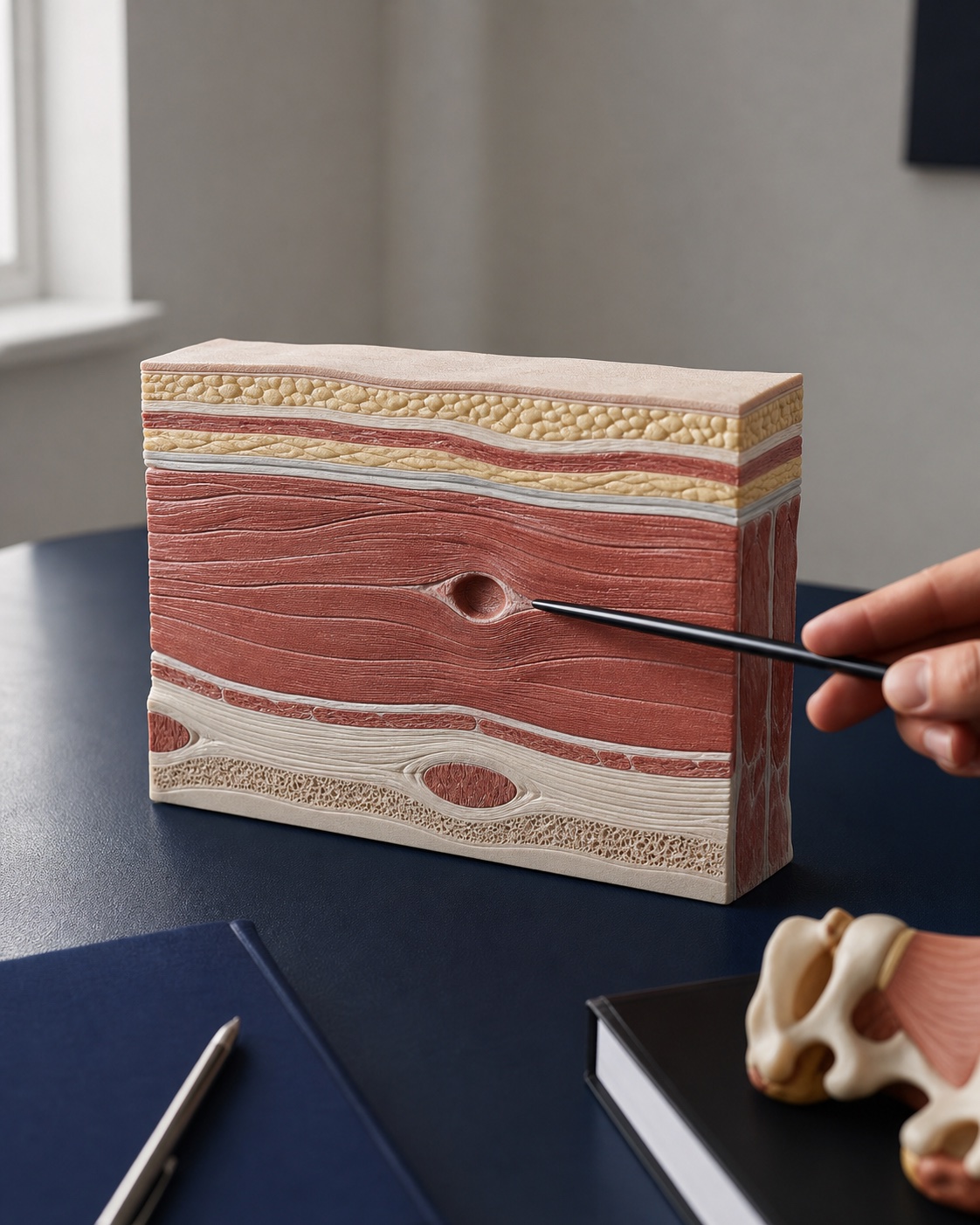
For some people, a hernia is a small, painless bulge found by chance. For others, it becomes a persistent source of pressure, pain, or limitation. The safest plan depends on which situation you are in.
What a hernia is
A hernia occurs when tissue pushes through a weak area in the abdominal wall. Inguinal hernias develop in the groin. Umbilical hernias occur around the navel. Incisional hernias form at or near a previous surgical incision. Other hernia types have different anatomy and different treatment considerations.
A hernia may appear as a bulge that is more noticeable while standing, coughing, lifting, or straining and less noticeable when lying down. Some bulges can be gently reduced, meaning the tissue moves back behind the abdominal wall; others cannot. A hernia does not repair itself, although its symptoms may remain stable for a period.
Reducible means the contents return to the abdomen spontaneously or with gentle pressure. Incarcerated means they are trapped. Strangulated means the blood supply is compromised—an emergency.
Symptoms—and when they become urgent
Common symptoms include a groin or abdominal-wall bulge, aching, burning, pressure, heaviness, or discomfort that worsens with activity, coughing, lifting, or a long period on your feet. Symptoms may improve with rest. The size of a hernia does not always predict how much it will bother someone.
Pain in the groin or abdominal wall can also arise from muscles, joints, nerves, lymph nodes, or other conditions. A clinical assessment is important when there is pain without a clear bulge or when the pattern does not fit a typical hernia.
Seek urgent medical care for a bulge that suddenly becomes larger, firm, very tender, discoloured, or impossible to reduce—especially with severe or increasing pain, fever, nausea, vomiting, abdominal swelling, or difficulty passing stool or gas. These may indicate obstruction or strangulation.
Do not repeatedly force a painful bulge back into place. If symptoms are severe or the hernia is no longer reducible, urgent assessment is safer than waiting for a routine clinic visit.
Inguinal hernia symptoms: what they usually feel like
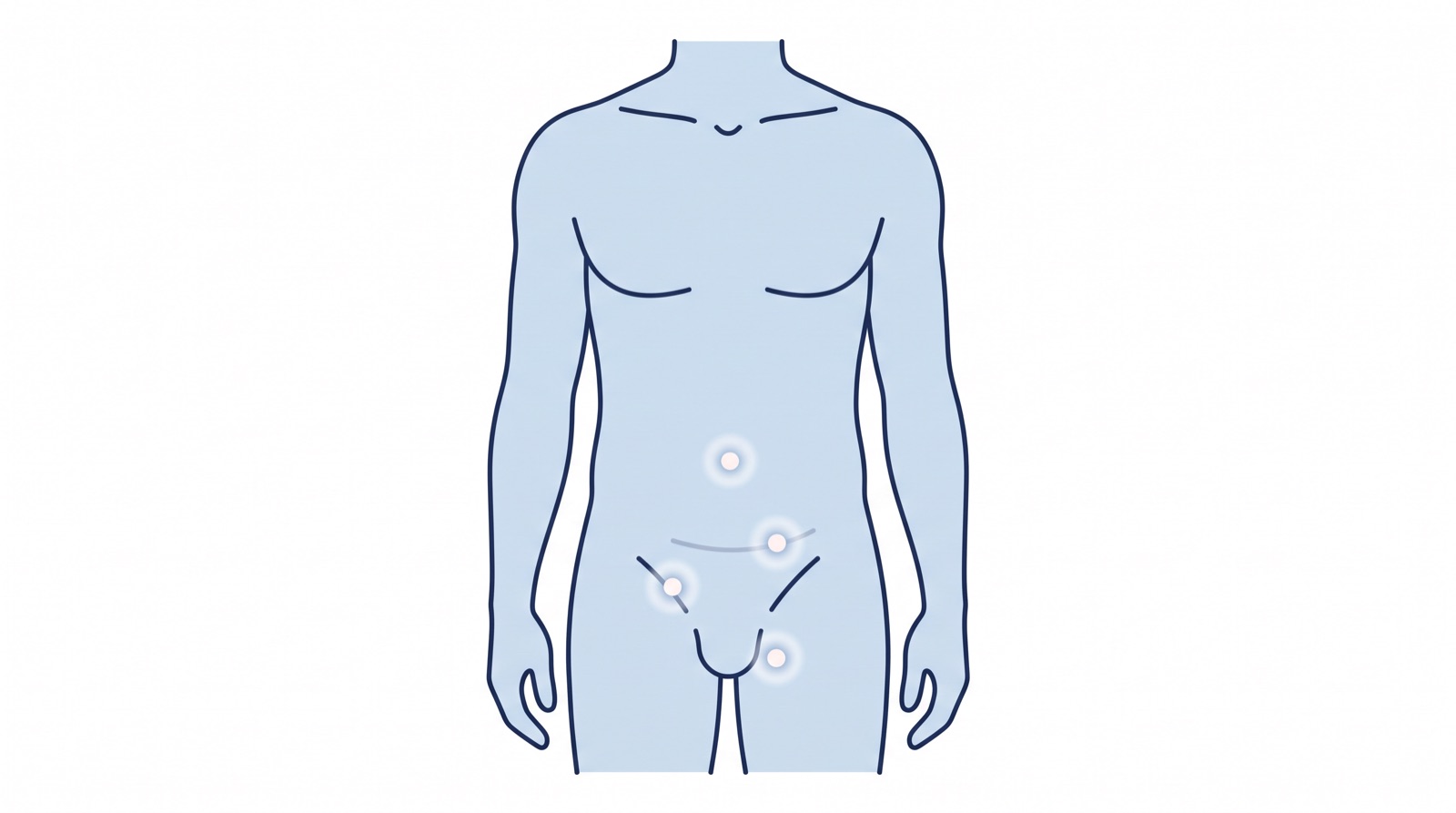
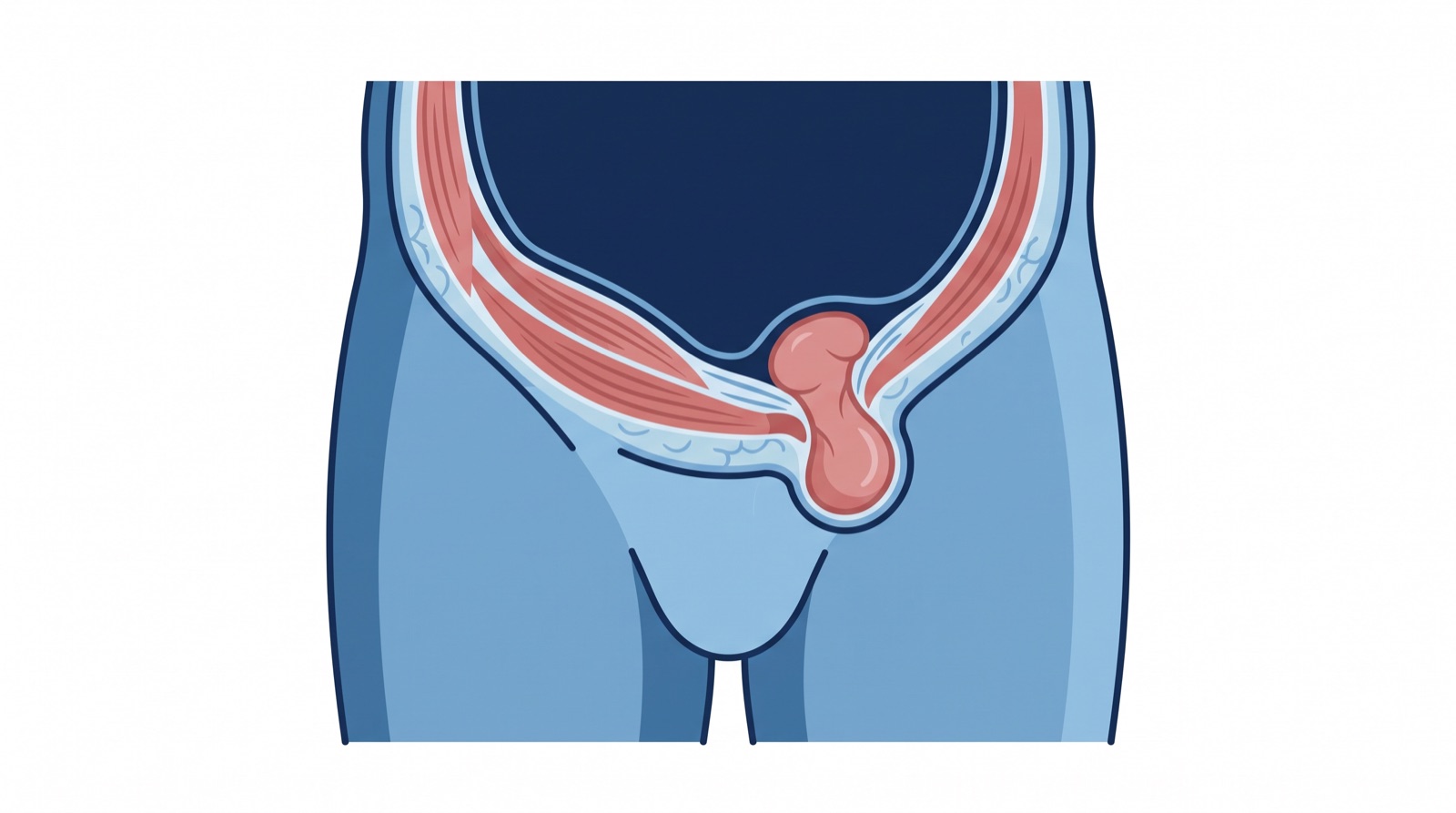
Inguinal hernias sit in the groin and are the most common type in adults. The classic sign is a bulge on one side of the groin that is easier to see or feel when you stand, cough, or lift, and that softens or disappears when you lie down.
The bulge is often not the first thing people notice. Many describe a heaviness, dragging, aching, or burning in the groin that builds through the day and eases with rest. In men, the bulge can extend down toward the scrotum.
- A soft groin bulge that comes and goes with position or effort.
- Aching, pressure, or a pulling sensation, often worse by evening.
- Discomfort when coughing, lifting, or straining.
- Burning or tingling in the groin, which can come from a nearby nerve.
In women, groin hernias can be subtle and are sometimes femoral rather than inguinal, sitting slightly lower near the top of the thigh. Femoral hernias carry a higher risk of becoming trapped, so persistent groin pain in a woman deserves assessment even without an obvious bulge.
Umbilical hernias in adults
An umbilical hernia forms at or just around the belly button, where the abdominal wall is naturally thinner. It usually shows up as a soft swelling that becomes more noticeable when you cough, strain, or sit up, and may ache after a long day.
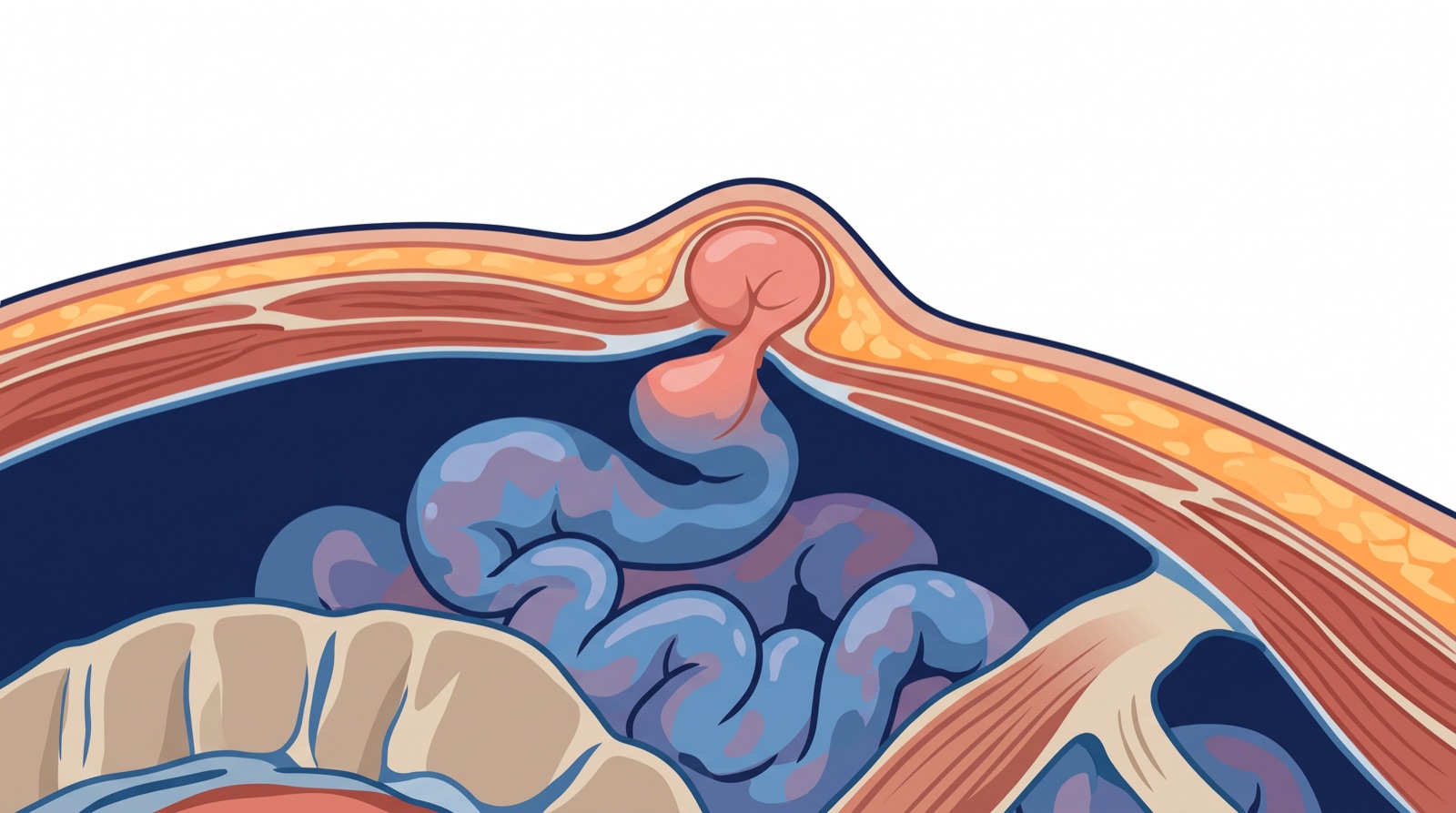
Things that raise pressure inside the abdomen make them more likely: pregnancy, carrying extra weight, a long-term cough, heavy lifting, or fluid in the abdomen. Umbilical hernias are also common in babies, and many of those close on their own in the first few years of life. In adults they generally do not close by themselves.
A small, painless umbilical hernia can sometimes be watched with a clear plan. One that is painful, growing, or hard to push back in is usually assessed for repair. The same emergency warning signs above apply: a bulge that turns firm, tender, or discoloured needs urgent care.
How a hernia is diagnosed
Many hernias can be diagnosed from the history and physical examination. A clinician may examine the area while you are standing and lying down and may ask you to cough or strain. The assessment also looks for alternative causes of the symptoms.

Ultrasound, CT, or other imaging can help when the examination is unclear, the hernia is not readily visible, body anatomy makes assessment difficult, or another condition is being considered. Imaging can support the diagnosis, but the treatment decision still needs to account for symptoms and the individual.
What to bring to a consultation
- When you first noticed the bulge or discomfort and whether it is changing.
- Activities that provoke symptoms and activities you have stopped doing.
- Whether the bulge reduces when you lie down or with gentle pressure.
- Previous abdominal operations and any earlier hernia repairs.
- Your medications, smoking history, work demands, and other health conditions.
When watchful waiting may be reasonable
Research and international guidelines support watchful waiting as a reasonable option for some men with an inguinal hernia that causes no symptoms or only minimal symptoms. This means planned follow-up and knowing the warning signs—not ignoring the hernia.
Many people initially choosing watchful waiting later have surgery because discomfort or limitation increases. Long-term evidence suggests this transition is common. The option is not equally appropriate for every hernia type, every sex, or every patient. Femoral hernias, for example, carry different risks and generally prompt a different discussion.
Agree on which changes should trigger reassessment: increasing pain, growth, reduced ability to perform normal activities, new difficulty reducing the bulge, or any urgent warning sign.
Reasons to consider planned repair
Repair may be considered when pain, pressure, or activity limitation affects daily life; the hernia is enlarging; the pattern raises concern for complications; or the hernia type is not well suited to observation. Work requirements, caregiving duties, access to emergency care, and personal preferences also matter.
Before proceeding, a surgeon should discuss the expected benefit, alternatives, anesthesia, recovery, and risks such as bleeding, infection, fluid collection, urinary difficulty, injury to nearby structures, recurrence, blood clots, and acute or persistent pain. The risk profile varies with the operation and the person.
Open and minimally invasive repair
Open repair uses an incision near the hernia. Minimally invasive repair uses laparoscopic or robotic instruments placed through several small incisions. Either approach can be appropriate. The choice depends on the location and size of the hernia, whether it is on one or both sides, previous repairs, prior abdominal surgery, anesthesia considerations, surgeon experience, and patient priorities.
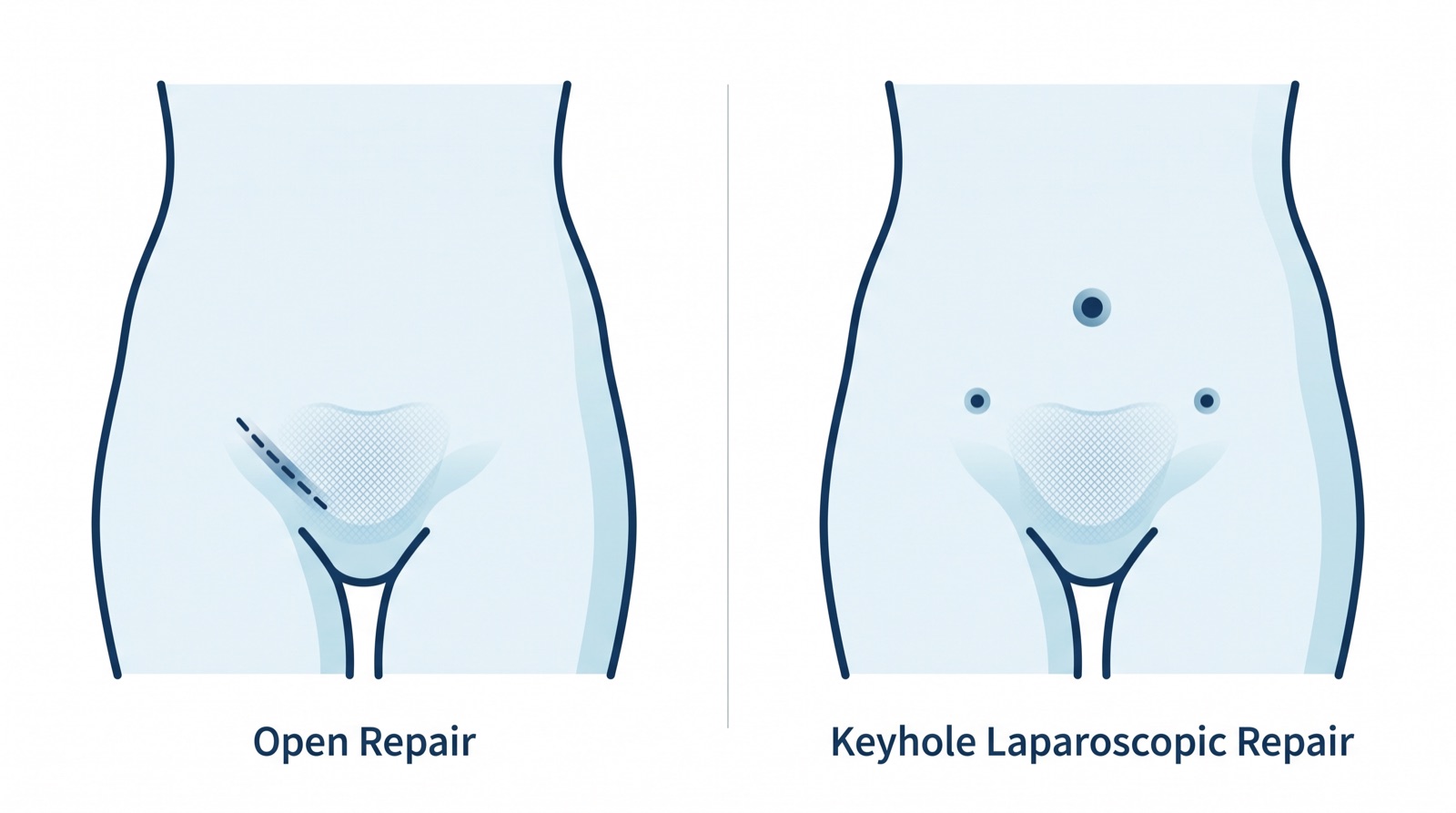
Mesh is commonly used to reinforce the weakened area and reduce recurrence risk in many adult hernia repairs. It is not a single product or one-size-fits-all decision. The surgeon should explain whether mesh is recommended, where it would be placed, and what alternatives apply to the specific hernia.
Define the goal
Clarify whether the main aim is relief of pain, prevention of progression, return to activity, or management of a complication.
Compare approaches
Ask why one approach is being recommended for your anatomy, prior operations, and health—not which operation is “best” in the abstract.
Plan recovery before surgery
Arrange help, time away from work, transportation, medication instructions, and a clear route for questions after discharge.
What recovery can look like
Most uncomplicated repairs encourage early walking and a gradual return to normal activity. Pain, swelling, bruising, and fatigue are expected to vary. The timeline for driving, lifting, strenuous exercise, and work depends on the repair, your symptoms, and the physical demands involved.

Follow your own discharge instructions for wound care, bathing, medications, constipation prevention, and follow-up. Avoid using a generic online timeline as permission to push through significant pain.
A typical hernia surgery recovery, stage by stage
Every repair is different, so treat this as a rough outline of what many people experience rather than a schedule to follow.
The first few days
Short walks start early, often the same day. Soreness, bruising, and swelling around the repair are normal. Pain medication, gentle movement, and avoiding constipation make this stage easier.
The first one to two weeks
Everyday activity comes back steadily. Many people with desk-based work return in this window. Driving usually waits until you can brake firmly and turn without pain, and are off medication that causes drowsiness.
The following weeks
Heavier lifting, strenuous exercise, and physically demanding work are reintroduced gradually. When you can lift, and how much, depends on your repair, so get a specific plan from your surgeon.
Longer term
Most people feel back to normal within a couple of months. Some tenderness or numbness near the incision can take longer to settle. Pain that persists or worsens should be reviewed.
Call the surgical team when something changes
Seek advice for fever, increasing redness or drainage, worsening rather than improving pain, persistent vomiting, inability to urinate, marked abdominal swelling, chest pain, shortness of breath, calf swelling, or a new bulge. Severe or rapidly worsening symptoms require urgent assessment.
Common questions
What does an inguinal hernia feel like?
Usually a groin bulge that is easier to feel when standing, coughing, or lifting, along with aching, heaviness, dragging, or burning that tends to build through the day. Some hernias cause discomfort before any bulge is obvious, which is why an examination matters.
Can an umbilical hernia go away on its own?
In babies, many close on their own. In adults they generally do not. A small, painless one may be watched with a plan; a painful, growing, or hard-to-reduce one is usually assessed for repair.
How long is recovery after hernia surgery?
Many people walk the same day, return to light activity and desk work within about one to two weeks, and build back to heavier activity over several weeks. Your surgeon's instructions for your repair take priority.
When can I lift after hernia surgery?
Light everyday lifting is often fine early; heavy lifting and hard exercise come back gradually. Ask for a specific plan, especially if your job is physical.
Is hernia surgery covered by OHIP?
Medically indicated hernia repair is an insured service in Ontario, typically arranged through a referral from your family doctor. The consultation is the place to confirm the plan for your situation.
Will a support belt or truss fix the hernia?
No. A support may temporarily change how the area feels for selected patients, but it does not close the defect. Poor fit can cause skin problems or delay assessment. Discuss its use with a clinician.
Can exercise make the hernia disappear?
No. Exercise does not close a hernia defect, although general conditioning can be part of preparation and recovery. Stop an activity that produces significant pain and ask for individualized advice.
Does every hernia need mesh?
No single statement fits every hernia. Mesh is common in adult repairs, but the decision depends on anatomy, contamination risk, repair type, and patient factors. Ask why it is or is not recommended in your case.
How long will I be off work?
That depends on the operation, pain control, and whether work is sedentary or physically demanding. Obtain a plan specific to your duties before surgery.
Sources & further reading
- National Institute of Diabetes and Digestive and Kidney Diseases: Inguinal hernia
- Society of American Gastrointestinal and Endoscopic Surgeons: Inguinal hernia repair patient information
- European Hernia Society: International HerniaSurge guidelines for groin hernia management
- Twelve-year outcomes of watchful waiting versus surgery for mildly symptomatic or asymptomatic inguinal hernia
- NHS: Umbilical hernia repair
Related patient guides
A good repair plan begins with the right diagnosis.
Bring your symptoms, work demands, questions, and goals to the consultation.
Contact the office for guidance →